Community Safety and Wellbeing Program for Black Families

Ifarada is a proud recipient of the Community Safety and Wellbeing Program funded by the Region of Durham

Overview: The Community Safety and Wellbeing Program is dedicated to supporting families in creating safer, healthier, and more resilient communities. Recognizing the unique challenges faced by families in today’s society, this program provides a range of services, resources, and Africentric supports designed to address both immediate crises and long-term well-being. We aim to empower families, support mental health, promote safety, and foster positive community connections.

This program is built on an Africentric foundation, focusing on healing, strength, and cultural empowerment. Through our crisis phone line, support services, and community-building initiatives, we aim to ensure that all Black families have access to the tools they need to thrive.


Key Features of the Program

1. Crisis Phone Line for Immediate Support

Our Kujali Family Support Phone Line is available to families who are experiencing emergencies, mental health challenges, or safety concerns. Whether you are facing a family conflict, encounter concerns with your child’s mental health, or navigating a personal crisis, our team of trained professionals is ready to offer immediate support, guidance, and resources.

2. Africentric Mental Health & Wellness Support

We believe in a holistic approach to mental health that is deeply rooted in Africentric principles of community, spirituality, and healing. Our Africentric Mental Health and Wellness Services provide culturally relevant counseling, therapy, and support groups for families.

3. Safety Promotion Programs

Our program provides resources and strategies to improve safety at home and in the community. These services include:

4. Educational Resources and Family Empowerment

The program offers educational workshops and resources to help families navigate critical life skills, such as parenting, financial literacy, and accessing community services.


How to Access Support


Why Africentric Supports Matter

Africentric supports are essential to addressing the specific needs of families, acknowledging the history and ongoing impact of systemic racism, and celebrating the richness of African cultural heritage. This program is designed to uplift families by incorporating culturally relevant healing practices, fostering community connections, and promoting wellness through the lens of African traditions.


Our Commitment

Our commitment to families goes beyond just offering services; we are dedicated to creating an inclusive, supportive environment where families can heal, grow, and thrive. We understand the unique challenges faced by Black families, and our mission is to provide resources that are not only practical and accessible but also affirming and empowering.

We are here to support families in every aspect of their safety, well-being, and mental health. We invite you to reach out, participate in our programs, and help us build a stronger, safer community for all.


Contact Information:

For more information about the Community Safety and Wellbeing Program or to schedule a consultation, please contact us today. Together, we can ensure that families have the resources, support, and community they need to thrive.


Program Partners and Collaborators

This program is made possible through partnerships with local organizations, mental health professionals, cultural institutions, and community leaders who share our vision of creating stronger, safer Black families. Together, we are building a network of support that empowers families to flourish.


This Community Safety and Wellbeing Program for Families centers on the importance of culturally competent care, Africentric healing practices, and community solidarity to ensure that every family has the support they need to navigate and overcome challenges while prioritizing their overall safety and well-being.

Funded by:

Case Study

Ifarada’s team, the Executive Director and university interns are orchestrating a case study to discuss the experiences of youth and families while navigating the systems in the community. The case study will help to provide a story about the families’ knowledge and explore the critical parts of the families’ lives that could have benefited from culturally-informed interventions. Data collected about Black people’s lives are new, and in the past, the experiences of Black community members were anecdotal and often denied. We aim to share the data and the stories that shape our lives, hoping to advocate for changes within the structural systems.

Key Priorities:

The research is not academic, and thus participants will receive an honorarium for their participation and time in the assessment. The commitment may consist of 2-5 meetings depending on the process, and an opportunity to engage in counselling to support the storytelling journey.

Our team will share further information regarding the Case Studies.

Research Projects: Mtu Ni Watu and Kasserian Case Studies

This study aims to examine: how does the structural system in education operates on an interpersonal level and steers Black youth’s encounter with the criminal justice system, and the effectiveness of embedding an Africentric learning curriculum for Black youth.

After a three-year project, does aligning child welfare with community organizations lead to better outcomes for Black families? Tell us your story and your experiences, and your thoughts on reimagining child welfare.


Ifarada Parent-Child program for Black and racialized families

Ifarada continued to prioritize better outcomes for Parents and Children

With a foundation grant from the TD Bank Group, Ifarada was able to support programming for parents, caregivers and guardians through the family wellbeing program, webinars, support groups, and therapeutic group programs.

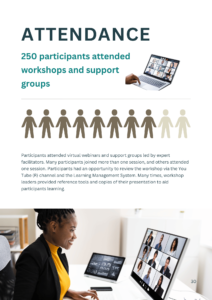
Through the initiative, 850 parents, guardians and caregivers accessed support services to strengthen their families and to achieve better outcomes.

Key areas of focus in the project:

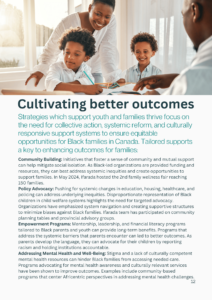
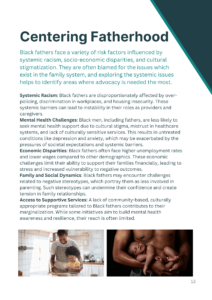
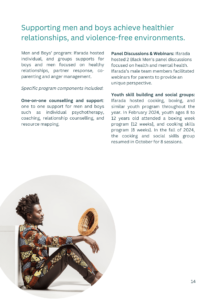
  1. Centering Fatherhood: The program focused on creating safe spaces for explore and examine strengthening their role in their family, and healing through their experiences of trauma and anti-Black racism. Programming centered on warm spaces for Black and racialized boys, panel conversations with Black leaders, and one to one intervention within the family systems.
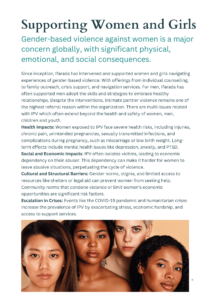
  2. Prioritizing women and girls: The suite of programs centered on healing and holistic care, education, and empowerment programs.
  3. Supporting Parents: Throughout the past year, Ifarada in collaboration with other funding sources hosted over 18 workshops and webinars geared to strengthen, support, and empower parents to strengthen their households and their communities. With parent programs, we acknowledge that parents know what is best for their family. Explorations of the impact of anti-Black racism on the family is explored, discussed, and acknowledged.

How we measure impact?

Ifarada holds the belief that growing, loving and emerging are life long experiences in the family. We endorse and support families to remain connected with Ifarada by offering resources, therapeutic programs at all ages, advisory groups, and family events and more throughout their time.

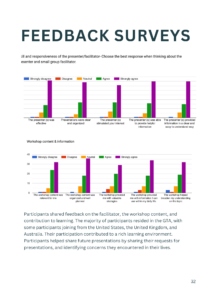
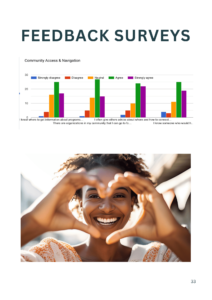
Many of our participants engaged in more than one program or attended multiple workshops.

Mnay of our participants believed they were connected with resources in their community.

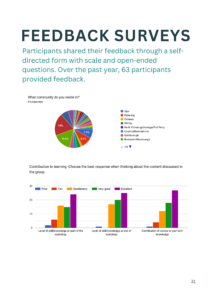
Many of our participants believed that the resources and information presented met their needs and their learning needs.

For full details of the report visit:Impact Report 2024.


Supporting enriched outcomes for parents

Ifarada is seeking to improve outcomes for parents, children, youth, and their families.

Over the past year, Ifarada has focused specifically on vulnerable populations, such as families with young parents, new parents, and parents who experience difficulties with child welfare, the family court system, and the legal system.  We have forged partnerships with provincial associations and regional organizations that service and provide training to enrich support for children, youth, and their families.

Our ground-breaking work seeks to build on our holistic approach that is trauma-informed, culturally based, and evidence-supported. We are seeking to address disparities that occur for Black children, and also families.


What our research states…

In a report published by the Public Health Agency of Canada, entitled and quoted in Social Determinants and Inequities in Health for Black Canadians, it is noted that “Black Canadians experience health and social inequities linked to processes of discrimination at multiple levels of society, including individual, interpersonal, institutional, and societal discrimination. Experiences of interpersonal racism can be overt or subtle and pervasive in the form of daily indignities. Well-documented examples at institutional and societal levels include racial profiling; over-policing (e.g. surveillance, harassment, excessive use of force) and under-policing (e.g. under-responsiveness, abandonment) of Black communities; over-representation of Black people in the criminal justice system; over-representation of Black youth and children in child welfare systems; systemic discrimination and under-treatment in hospitals and other healthcare systems; and low representation or absence of Black people in leadership positions across institutions and systems.” (Reference: https://www.canada.ca/en/public-health/services/health-
promotion/population-health/what-determines-health/social-determinants-inequities-black-
canadians-snapshot.html).

According to the Ontario Human Rights Commission in their report, Interrupted Childhoods: Over-representation of Indigenous and Black children in Ontario Child Welfare, “Black children were over-represented in admissions into care at 30% of agencies (8 of 27).

Overall, the proportion of Black children admitted into care was 2.2 times higher than their proportion in the child population.” The report goes on to explore the complex, systemic challenges that have led to this reality, which, among others, includes that child welfare institutions in Canada evolved within a context of White supremacy and anti-Black racism and that professions in the community tend to over-report racialized families to child welfare authorities.”

(Reference: https://www.ohrc.on.ca/en/interrupted-
childhoods#:~:text=Black%20children%20were%20over-
represented%20in%20admissions%20into%20care,higher%20than%20their%20proportion%20i
n%20the%20child%20population.).

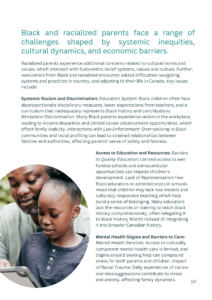
Mental Health: Mental health is a critical issue that affects people of all ages and backgrounds. However, Black children, youth, and families face unique challenges. Experiences of intergenerational trauma, racism, discrimination, and social inequities all take a significant toll on mental health and well-being and the ability to advocate for themselves and their community.

In addition, the Mental Health Commission (MHC, n.d.) asserts that “Stigma (including self-stigma) can prevent people in Black communities
from discussing or seeking support for their mental health.” MHC (n.d.) reports “Studies have also found that difficulty recognizing symptoms of depression and a lack of
information about mental health prevented Black people (especially older adults) from seeking mental health services when symptoms first presented themselves.”

Parenting can be challenging for anyone, and it can be even more so when dealing with the added stressors of systemic racism and discrimination. Many
Black and racialized parents do not have access to resources and support networks that can help them develop effective parenting skills, and/or due to previous stigma and
discrimination, they are discouraged. There is a strong link between parental mental health and child well-being.

When parents have the tools to manage their mental health effectively, they are better equipped to provide stable and supportive parenting, which has a positive impact on their children’s emotional and psychological development.

prepared by AG Grant Development, Consultants.

Services Provided:

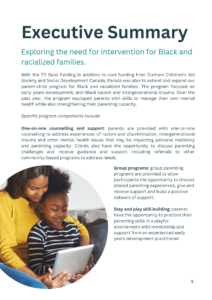
Ifarada’s Parent-Child program for Black and racialized families will extend and expand our parent-child program for Black and racialized families that focuses on early years development, anti-Black racism, and intergenerational trauma. The program will equip parents with skills to manage their mental health while strengthening their parenting capacity.

Specific program components include:


Supporting our community thrive with the Kujenga Youth Wellbeing Program

In the first three months, the Kujenga Youth Wellbeing Project has surpassed initial goals and expectations.  The Kujenga Youth Wellbeing Project is a four-year project geared to supporting families to enhance their social and emotional wellbeing.

What we hope to accomplish

Enhanced social, emotional, and cultural pride for Black and racialized families, through the development of programs that focus on African, Indigenous, and Caribbean culture, diverse histories, and exposure to mentors that represent the ethnic identity of participants; and,

Increased positive parenting skills, strategies, and attitudes for black and racialized families by offering parent-sessions led by youth to equip parents to engage in community resources and address social isolation; and,

Improved mental health through reduced stress and anxiety amongst black and racialized youth by providing outreach and counseling options that are culturally relevant, trauma-informed, as well as supportive; and,

Increased support for youth transitioning out of care and youth leaving high school (grade 11 and up) which includes civic engagement, leadership programs, mentorship, and volunteer opportunities to engage in their community and lead projects.

Build and nurture community partnerships across the region, outreach, and collaborate with organizations, as evidenced by the number of community partnerships and the quality of relationships developed, and market upcoming programs and initiatives.

Our Programs

Ifarada's fundraising campaign

Parent Workshops and Family Outreach programs facilitated by social workers and/or child and youth practitioners.  Our family outreach program is designed to support families experiencing difficulties with relationships, family conflict, anti-Black racism and other forms of racism, and more.

Our therapeutic group programs are designed to support children and youth to address their emotional and social wellbeing.  The groups are skilled based and rooted in enhancing children’s capacity to manage anxiety, bullying, low self-confidence and self-esteem, identity and more.  Therapeutic groups are typically five to eight weeks in length, and range from in-person to virtual depending on the group. Admissions are available at any time.

In collaboration with Durham Family and Cultural Centre, we have excellent programs designed for youth transitioning to adulthood, accessing professional and career support, and receiving mentorship. Young people can join our three week life skill and coaching development session throughout the year.  Connect with community partners and professionals to jump start your career development.  Or, attend one of our monthly workshops designed to learn micro skills such as computer literacy, resume and cover letter building, financial literacy and more.

individual counseling

Free Counselling, our expansive counselling services provide free psychotherapy to children and youth under 29 for up to 10 sessions.  Our therapists have experiences in play therapy, dyadic approaches, expressive arts therapy, popular interventions such as Dialectical Behaviour Therapy, Narrative Therapy, and Cognitive Behaviour Therapy, spiritual care and more.

We also work with external therapists in Durham Region and beyond, whom can provide the same support with greater flexibility for your family.

Join our movement

We are looking for community partners to build collaboration, and support the community. Consider becoming a partner today!

Our Partners

Review our Quarterly Reports

rites of passage program

Annual Year End Report [September 2022- September 2023]

Kujenga Youth Wellbeing Annual Report [2022-2023]

Youth Program Final Report September – December 2022

Ifarada Wellbeing – Sept- January

Upcoming Initiatives

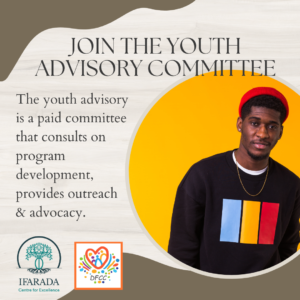
Join our Youth Advisory Council.  Our youth advisory council is an integral part of the Kujenga Youth Wellbeing Project.  Youth members help advise, consult, and advocate for youth within our programs, and help to shape future programs.  Youth advisory members receive $250 / per involvement.

Africentric Approach

An Africentric approach is a theoretical template for understanding African people, and their ways of living and being.  Africentrism was developed by many Canadian philosophers who aimed to understand African values and principles, in the context of colonialism and white supremacy.  Africentrism is a shift from Eurocentric views of living and being, and the approaches embrace a holistic approach.

Africentrism values:

Our Approach:

When families interact with the children’s aid society, or experience difficulties within their dynamics, it is an issue that the entire family and the systems that support the families should address.  It is not an individual problem.  For example, if the young person in the family is involved with the police, the problem does not lie with the young person.  The family, the school, the criminal justice system, the police, the community, and the youth all play a role in contributing to the problem.

What our work entails:

Once we receive a referral, the family wellbeing worker contacts the family first to develop a relationship by introducing themselves and establishing a date/time to meet.

We establish several meetings to get to know your family and how your family functions.  We seek to understand your family’s strengths, their values, their beliefs, and how they have addressed the problem in the past.

Other areas of concern:

  1. Spirituality- how does the family find faith, hope, what is their purpose, and how do they see meaning in every day life.
  2. Ecosystem- what are the services that interact with the family, the nature of the relationship [i.e., positive, contentious], and the experiences of anti-Black racism the family encounters.
  3. Intergenerational experiences- what is the family’s history? what are patterns of living that has been passed down in the family? what are the family’s strengths that has contributed to their resilience?
  4. Relationships- what are the relationships within the family? what are the strengths and areas of concern in the family?

An Africentric approach focuses on creating a plan that addresses all areas of the family, and builds upon the family’s strengths.

Ifarada is gearing towards an Africentric practice by employing culturally-relevant, trauma-focused and holistic approaches that support the family.


Therapeutic Group Programs that focus on reducing social isolation, enhancing cultural pride, and building social skills.

Mentorship and Leadership Programs that help enhance opportunities for economic resources, generational wealth, and ownership.

Volunteer Programs that focus on creating opportunities to enhance civic engagement and responsibility, building a social enterprise, and supporting the community.

Spiritual care services and supports that help people connect with their unique purpose, find meaning in existence, and reclaim faith in possibilities.

Mental health counselling and psychotherapy to address concerns, build coping strategies, to process traumatic experiences, and to heal from difficult experiences.

and so much more.

Kasserian Ingera Child Wellbeing Support

Ifarada: Centre for Excellence is proud to work with the Durham Children’s Aid Society on the collaboration in a community-based initiative supporting families with African ancestry.


Kasserian Ingera and Ifarada offer two levels of intervention support:

Service Coordination

Through a culturally-informed, strength-based, and holistic approach we work with your family to identify the needs, and strengths of the family. Our service coordinators will guide your family to access support whether within Ifarada or with our community.

Family Outreach Our family outreach provides an Africentric wraparound approach to support the well-being of the child, youth, and family. The family outreach provides intensive services to families through 2-3 visits per week, crisis support, and family counselling. Our approach is grounded in theories Africentric, holistic, and trauma-informed approaches.

Read about the changes with Durham Children’s Aid Society and Ifarada: Centre for Excellence (Announcement with Durham Children’s Aid Society)


“Healing comes when the individual remembers his or her identity the purpose chosen in the world of ancestral wisdom and reconnects with what world of the Spirit”

Malidoma Patrice Some (1999) in the The Healing Wisdom of Africa: Finding Life Purpose Through Nature, Ritual, and Community.


About the Program

The Kasserian-Ingera program started in April 2022.  In the first six months of the program, we serviced up to 50 families through Durham Children’s Aid Society and community -based referrals.

Our Team

The Ifarada-Kasserian team is a diverse group of professionals who provide support to families and the development of the program in a unique, inclusive and responsive manner.

Family Wellbeing Workers

Monique Perry, Curtis Sheppard, and Joydeen Phillips are part of our Family Wellbeing team.  They respond to referrals, meet with families and the Society worker, and provide direct support to the family. The family wellbeing workers have a range of experience such as clinical experience, outreach, case management, family support, and more.  Our family wellbeing workers actively participate in training, supervision, and reviews to ensure their processes align with an Africentric, holistic, and inclusive approach that benefits Black families.  Furthermore, our family wellbeing workers are grounded in understanding anti-Black racism, and its impact on children, youth, adults, parenting, and of course, families.

Therapeutic Team

Our therapeutic team provides psychotherapy, and consulting services to families who require individualized support.  Our team possesses a graduate degree in Counselling Psychology or Social Work, and possess experience working with Black families, providing clinical interventions, and treatment to families.

Sessions consist of one hour weekly or bi-weekly appointments, up to 10 sessions..

A psychological consult is usually two to three hours with a psychologist with one of the associated firms.

Support Team

Ifarada’s team provides support and guidance to the team to ensure the project is well supported.

Rhiana Guerra, Program Development Team Lead, provides support by following up with new referrals and assigning to the family worker.

Nicole Perryman, Executive Director, provides guidance and support to the team and collaborates with the Durham Children’s Aid Society project team.

Family Relief Fund

Our program can also provide immediate relief and supports to families, up to $250 in direct need.  Usually, the fund can deliver supports within 24-28 hours to families.

Family Gathering & Building Connections

Our team will hold family gatherings to build connections with the community.  Check our Eventbrite for updates on upcoming dates/times.

What is an Africentric Wraparound Approach? Read More

What are the rights of African Canadian and African Ancestry peoples? Review our code of ethics in serving the Black population, and advocating for children and families. The Rights of Black Families.

Evaluation Reports

Quarterly Update October 2022 

Kasserian Report 2022-2024


Reducing Barriers in Trauma-Informed Care

This personal article piece was prepared by Tabetha, based on a webinar attended by the Ontario Association for Social Workers (OASW) (Chandrasekera, 2022). The post was edited by Ifarada.

Mental health illness or addiction issues is prevalent in the lives of Canadians.

This is indicated in research that shows early childhood/adolescent onset of mental illness, and one in two persons experiencing a mental illness by age forty (Chandreasekera, 2022).

Males have higher addiction rates than women, and as expected, people experiencing poverty are more likely to report poor mental health.  The two continuum of mental health are positive – described as flourishing, and negative – described during the pandemic as languishing (Chandreasekera, 2022).

Mental health is substantially impacted by problematic substance use that leads to addiction.  There are ‘4 Cs of substance use’ explanation as follows: craving, compulsion to use, loss of control of amount and frequency of use, and continued use despite consequences.  An individual who uses substances has a craving for the substance followed by compelled feeling to use.  Eventually, the user will lose control of the amount being used and how often they are using it, but this does not disrupt the usage.  Instead, the person will continue to use regardless of what the consequences are.  Addictions can be substance related (alcohol or opioids) or process-related (behavior addictions like gambling or poorly managed, excessive internet usage) (Chandreasekera, 2022).

Having established substance use and addiction can affect mental health, and further the individual’s social determinants of health

(Chandreasekera, 2022).

There were sixteen social determinants of health as follows: health, gender, housing, income, social exclusion, (dis)ability, education, employment, food insecurity, early childhood development, geography, globalization, health services, immigration, indigenous ancestry, and race.  Avoidable, unfair, systemic inequities contribute to negative health outcomes.  For example, access to healthcare as a direct line leading to needed services for certain resource-rich individuals was shown in contrast to other individuals with the same needs, seeking the same services but who had a more convoluted, time-consuming path.  Thus emphasizing how a negative outcome can occur as a result of lacking in area/s of the social health determinants e.g., education, income, and/or social status (Chandreasekera, 2022).

Discrimination affects health.  It can also result in oppression as represented by cultural imperialism, marginalization, exploitation, powerlessness, and violence.  The stigma and discrimination resulting from mental illness means that many people would share information about a family member’s diabetes or cancer diagnosis willingly, but they would not be equally willing to share information about a mental illness diagnosis of a family member.  Likewise, many people are concerned or afraid to be in the company e.g., relationship, workplace, or social setting of someone with a mental illness.  As a result many people indicate they would not tell their manager or seek medical help if they had a mental issue.  Stigma surrounding mental health can lead to micro-aggressive messages that communicate to a person that they are different and do not fit in.  Different types of discriminatory acts against persons over time can result in traumatic stress.  Some types of traumatic stress include single incident/specific life event, daily lived experiences and microaggressions, intergenerational trauma, chronic contextual experiences, collective experiences, or vicarious experiences.  Not only can discrimination cause trauma, but that it is trauma.  Because of discrimination, when tennis legend Serena Williams gave birth to her baby, she experienced complications afterwards.  However, the medical staff did not initially take her seriously or did not attend to her complaints swiftly.  It turned out that she had blood clots in her body.  Serena had to advocate for herself while she was severely ill.  There is a stigma that Black women are strong, thereby possessing a higher pain threshold than most.  Consequently, when Black women alert medical staff to pain/discomfort they have, their calls for help are largely disregarded, because of racial stigma.  If this can happen to a wealthy celebrity who has access to the best resources in the system, imagine then the conditions faced by the average minority person within the same system.  Many people of color face these and other types of health inequities often with fatal results (Chandreasekera, 2022).

The data showed that people experiencing poverty were more affected by COVID-19 than their wealthy counterparts as indicated by number of COVID-19 cases and hospitalizations

(Chandreasekera, 2022).

Similar results were seen for ethno-racial groups when compared to White people; and along the same lines, the neighbourhoods with the highest visible minority and lowest incomes had the highest weekly new sporadic COVID-19 cases.  This was in stark contrast to high income neighbourhoods with the lowest percentage visible minority which showed lowest weekly new sporadic COVID-19 cases (Chandreasekerea, 2022).

Discrimination can be addressed at the individual, community/program, and system/policy level. At the individual level the affected person must be assessed, validated, and supported.  At the community/program level it becomes necessary to engage people with lived experience, collect data and use decision support tools to aid the process.  At the system/policy level discrimination can be addressed by engaging people with lived experience, collecting data, and engaging in policy advocacy.

Discrimination is trauma. Therefore, discrimination must be addressed to achieve healing

(Chandreasekera, 2022).

Reference: Chandreasekera, 2022, “Discrimination is Trauma: Trauma Informed Care Approaches to Supporting Marginalized Populations” [webinar] Toronto: Ontario Association for Social Workers.

Trauma-Informed Parenting

This article was written by: Shereen Sohan-Khan, Wellness Therapist [Intern] on October 16, 2021, and edited by: Nicole Perryman
Being a trauma-informed parent

Photo by nappy on Pexels.com

Trauma-Focused Cognitive Behaviour Therapy (TF-CBT) speaks to the importance of including parents/caregivers in the therapy sessions when working with children. The inclusion of parents/caregivers in sessions provides adequate parent training that can be used outside the therapy office to manage their child(ren) challenging behaviours.

One of the essential aspects of parent training is reinforcing good behaviour and ignoring unacceptable behaviour to reduce problem behaviours in children.

How does this [trauma-focused approaches] measure up when African American parents/caregivers are challenged by a racially oppressive society?

Adkison-Bradley et al. (2013) state that “child discipline in African American homes is defined as a teaching process in which African American parents socialize their children to make meaningful life choices and to thrive in an environment that has historically been hostile toward African Americans” (p. 1). In some instances, Black parents/caregivers may resort to physical discipline, a form of punishment used by their parents/caregivers when they were a child. 

Choosing positive parenting

The use of physical discipline such as spanking functions to instill fear and respect for authority. This learned behavior stemmed from the institution of slavery, where enslaved Black people were beaten by their slave owners. In turn, enslaved people had to use similar forms of discipline as a way to protect their children. According to the author, [Black people used physical discipline] as a means of teaching obedience, survival in racially hostile environments and protected them from more significant harm for defiance or violation of the social rules. Although slavery was abolished years ago, physical discipline is present in the cultural attitudes, values, and child-rearing practices of some Black parents today (Kelch-Oliver & Smith, 2014). Now, Black parents are challenged by a system that views physical discipline as an abusive form of punishment which can cause challenges with the law and local child welfare authorities. However, at the same time, Black parents recognize that they are still raising children in hostile environments, and have similar concerns for their children. Thus, providing Black parents support with navigating their child’s experience of racism and shaping healthy behaviours may require additional support and guidance.

Photo by Vanessa Loring on Pexels.com

Parent training effectively teaches Black parents/caregivers healthier ways of managing problematic behaviours children may exhibit. Further, by reducing behaviour difficulties in the home, parents may experience reduced stressors. Trauma-Focused Cognitive Behavioural Therapy focuses on training the parent/caregiver on approaching their child(ren)’s behavioural challenges as part of the treatment plan. Parents/caregivers can also be trained using Psychosocial parenting education and training programs. Kelch-Oliver & Smith (2014) points out that “parenting programs are typically delivered in a group format versus individualized therapy, which is cost-effective, expands access, decreases stigma and social isolation promotes peer support and optimizes provider resources” (p.3).

The power of group

Group therapy is a component of the TF-CBT approach. Group therapy allows the parents/caregivers to meet other parents experiencing similar challenges and provide them with a safe and empowering space to connect and learn from each other. Kelch-Oliver & Smith’s (2014) research study showed that using the psychosocial parenting intervention, Triple P-Positive Parenting Program with a Black single mom, helped her become more authoritative in dealing with her child’s problematic behaviours. The parent was recommended to encourage her child to behave in appropriate and adaptive ways and increase the opportunity for quality time for mom and child to improve their relationship. After six weeks of follow-up, the mother reported improvements in her relationship with her child, reduced her child’s problematic behaviours such as tantrums, and improved confidence in her parenting ability to manage her child’s behaviours.  

Tips for Parents

-Understand how anti-Black racism may impact your child, and how your child responds to this experience

-Seek support to enhance your parenting skills when your child’s behaviour becomes difficult to manage

-Consider positive discipline as opposed to corporal punishment or punitive measures

-There are many therapeutic models and supports available for Black families and children to help improve the home environment.

The Parenting/caregiving role can be a difficult task at hand. However, understanding where the parent/caregiver’s cultural values are rooted can be a helpful tool for counsellors working on training the parent/caregiver to adapt new behaviours when working towards reducing the child(ren) problematic behaviours. 

References

Adkison-Bradley, C., Terpstra, J., & Dormitorio, B. P. (2013). Child discipline in African American families. The Family Journal, 22(2), 198–205. https://doi.org/10.1177/1066480713513553 

Kelch-Oliver, K., & Smith, C. O. (2014). Using an evidence-based parenting intervention with African American parents. The Family Journal, 23(1), 26–32. https://doi.org/10.1177/1066480714555697

Coping with social distancing

We have the answers for you.

The Centre for Addiction and Mental Health (CAMH) has put together a COVID-19 resource page for individuals seeking mental health support to manage the crisis.  If you have a prior experience with trauma, often feel anxious on a regular basis, and struggle with managing stress, it is expected that this experience may place a strain on your coping skills.

Sigh of Relief.  We will get through this together.


And just like that, we were home…


Many of us may not have anticipated, or considered that this virus would affect our country, our communities and our homes.  I remember listening to the news daily that covered Covid-19 with hopes that the crisis would slowly become yesterday’s news. It never did. While we were living our best lives, attending meetings, walking our children to school, planning our parties and gatherings, people around the world were slowing affected by the disease. Within a matter of days, we were informed that the best protection was “social distancing”, and with days our abilities to attend restaurants, go to the barber, get our nails did, go shopping, go to work, and so much more would end.  It is normal for us to experience stress and anxiety symptoms.  It is normal to feel panic and worry about our futures and our families.  It is expected that our past experiences of trauma may influence our coping.


It is normal for us to experience stress and anxiety symptoms.

As we learn to cope with our temporary new-reality


“Through the storm”

You can expect that the crisis will place a strain on your emotional, mental and psychological health. During this crisis focus on: seek credible information, assess personal risk, maintain your familiar routines, find balance, make “intentional” moves, practice relaxation and meditation.


The Centre for Addiction and Mental Health posted a website to assist you with managing the crisis within your daily life. For more information and to access their website select below:


I will try to be honest and authentic. The first week was absolutely difficult for me. I went from meeting and speaking to over 100 people per week, from teaching amazing students, meeting with my wonderful play-therapy kids, to supporting adults, couples and families, and so much more… to closing my office (insert crying face emoji). The curve was unreal. Emotions such as panic, fear, worry, anxiety, stress, and frustration were floating through me and around those I spoke with. Acknowledging our feelings are real means that we can imagine ourselves floating through muddy waters and accepting we are here, in this place, right now. Radically accept that we can not change our current circumstances but we can make the best out of our situation. We can draw upon our inner resiliency, strength and faith to help us float through this experience until we reach the shore again.


  • Lower the channel on Covid-19 updates
  • Video chat friends and/or family every day
  • Netflix, Prime, Crave video is the place of all great series
  • Host & attend virtual events
  • Rekindle your love for board games. Monopoly anyone?
  • Bake new recipes every day
  • Create your own family cook show
  • Get plenty of rest & sleep
  • Journal
  • Maintain your similar routines, with more breaks
  • Exercise daily
  • Yoga exercises
  • Read a new book
  • Join an online book class
  • Connect with friends you neglected to speak with
  • Creative writing or art
  • Plan your 2021 vacation schedule
  • Moderate alcohol & drug use
  • Boost your immune system with healthy foods & drinks

Crisis Resources

During this challenging time, many aspects of our lives are being impacted. If you are experiencing mental health difficulties or distress, and find yourself in crisis and in need of support, the following are a list of relevant resources. In the case of an emergency, please call 911 or contact your nearest hospital emergency department.

CAMH provides information on coping with stress and anxiety, as well as strategies to maintain mental wellness during the COVID-19 pandemic.


Durham Mental Health Services offers a range of crisis supports to assist individuals who are experiencing a personal or situational crisis. Crisis services are free and confidential. C.A.L.L. (Crisis-Access-Linkage-Line)
Call 905-666-0483 (Local) Call 1-800-742-1890 (Toll Free)


Kids Help Phone is a 24/7 national support service for young people and completely confidential. Text CONNECT to 686868 Call 1-800-668-6868

Distress Centre Durham offers 24/7 telephone services, with trained responder volunteers who can provide emotional support and encouragement, crisis management, suicide risk assessment, community resource/ referral information, and emergency intervention. Call 905-430-2522

Youthspace.ca is an emotional and crisis support chat, available to anyone in Canada under 30, from 9pm to 3am EST. Online Instant Message Chat Text 778-783-0177